
The Global Rocket Squeeze: Why SpaceX’s Pivot and Geopolitical Policy Are Starving the Satellite Industry
October 14, 2026 | By Editorial Desk
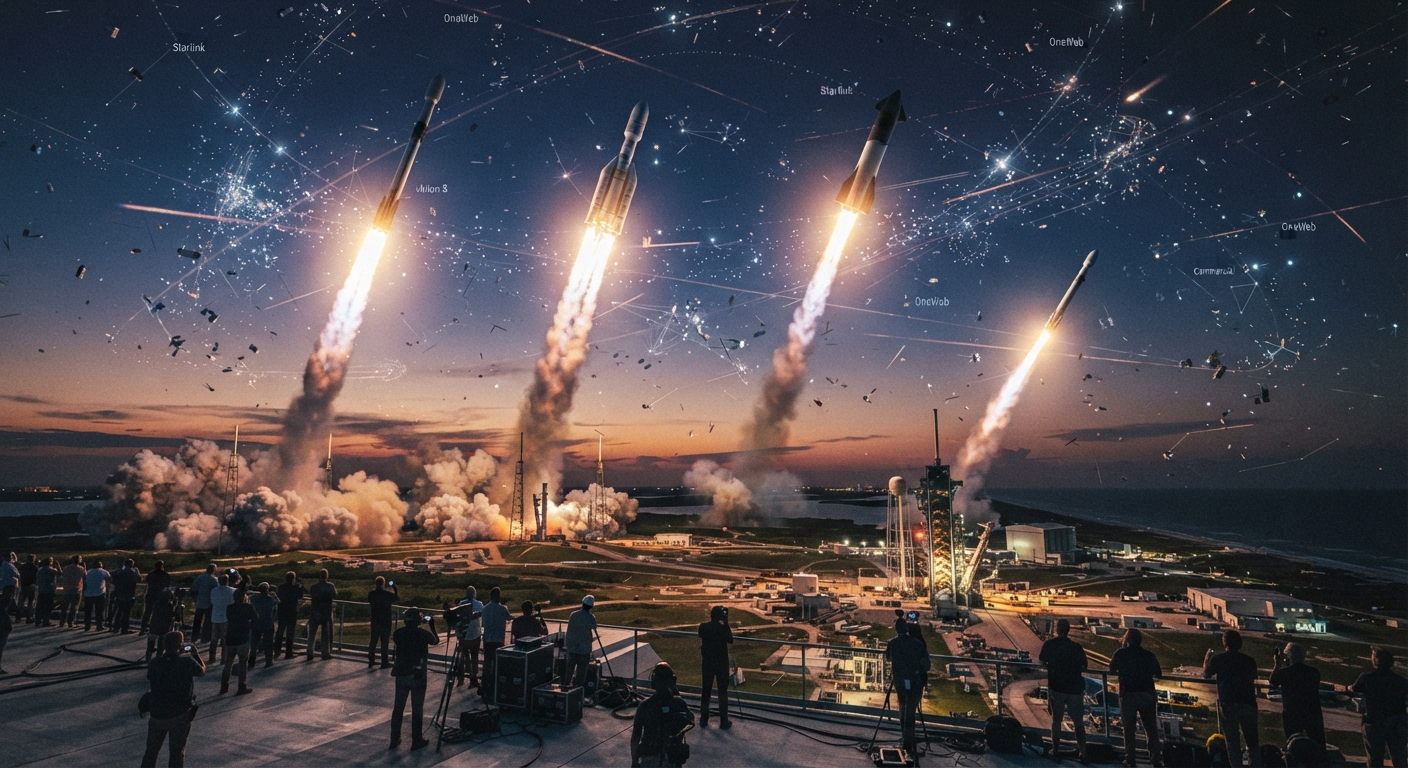
As commercial and defense entities race to launch thousands of new satellites into orbit, a quiet panic is rippling through the aerospace industry. Despite soaring demand—with forecasts projecting 7,000 satellite deployments annually within a decade—the world is facing a severe supply bottleneck.
At the center of the crisis is an uncomfortable reality: the companies that build rockets can no longer keep up with the companies that need them, and the world’s dominant launch provider is increasingly building rockets for itself.

The Profit Paradox: Satellites vs. Launch Pads
The root of the shortage lies in a fundamental economic mismatch. Building launch pads, pouring concrete, and scaling rocket production require massive capital investments. Yet, compared to the explosive profitability of operating satellite constellations, traditional launch services offer comparatively thin margins.
Major telecom players, defense agencies, and tech giants are sitting on billions of dollars in funding and deep order backlogs. Companies like Telesat have booked flights only to turn away lucrative offers to sublet their space, while Amazon struggles to find the ride-shares necessary to get its mega-constellation off the ground. The capital is there, but the physical infrastructure and vehicle availability are lagging dangerously behind.
SpaceX, the Falcon 9 Phase-Out, and Starlink’s Monopoly
For years, SpaceX’s reliable Falcon 9 has been the workhorse of the global space economy, handling a staggering volume of launches with near-perfect recovery rates. However, SpaceX is aggressively moving to phase out the Falcon line to pivot capital and engineering talent entirely toward the Starship program.
While Starship promises unprecedented payload capacities, the shift creates a massive conflict of interest for the rest of the market:
- Internal Priority: SpaceX generates exponentially more revenue from its own Starlink division than it does from third-party commercial or government contracts.
- The 2028 Deadline: With SpaceX slated to stop accepting Falcon reservations after 2028, outside operators realize that Starship capacity will be subjected to a strict “right of first refusal” for Starlink payloads.
- Defense and ISS Complications: Starship is not currently configured to service the International Space Station (ISS), creating a logistical nightmare for crew and cargo transport if the aging station’s lifespan is extended.
This growing supply pinch has even sparked radical speculation among defense analysts—including murmurs that the U.S. government could eventually intervene or mandate the continuation of the Falcon program under national defense authorities.
Geopolitical Roadblocks and Western Vulnerability
Compounding the private sector’s woes is a web of international trade restrictions and sanctions that have severely limited global alternatives:
- The Wolf Amendment: Enacted over 15 years ago to ban NASA-China cooperation, the legislation intended to deny advanced technology to Beijing instead compelled China to independently build a dominant, self-sufficient space program, including advanced remote sensing and reusable rocket tech.
- The Russian Sanctions: Concurrently, Western sanctions on Russia cut European rocket developers off from crucial components, forcing them back to the drawing board.
- Limited Competitors: While India and Japan continue developmental efforts, their combined annual output remains too low to fill the void left by Western supply constraints.
As a result, SpaceX has essentially acted as the sole viable Western supplier—a position that is becoming untenable as SpaceX turns inward.
The Horizon: China’s Emerging Capacity
While Western operators grapple with regulatory bottlenecks and internal corporate shifts, China’s commercial space sector is scaling rapidly. Chinese firms are aggressively testing reusable rockets and laying the groundwork for mega-constellations designed to dwarf existing footprints.
Because traditional Western ITAR regulations and policies like the Wolf Amendment lock out international entities from utilizing Chinese services, a divided global market is taking shape. If Western launch capacity remains choked, China’s eventual surplus of exportable launch capacity may find a very willing market among governments and enterprises operating outside U.S. regulatory frameworks.
What Comes Next?
The global rocket shortage exposes the fragility of an industry overly reliant on a single dominant player. Unless alternative launch providers—such as Blue Origin or United Launch Alliance (ULA)—can successfully scale operations, or regulatory frameworks adapt to a changing geopolitical landscape, the multi-trillion-dollar satellite economy risks hitting a hard ceiling in the sky.