

CRITICAL INFRASTRUCTURE CRIPPLED AS MASSIVE OVERNIGHT STRIKE PLUNGES KYIV INTO TOTAL BLACKOUT
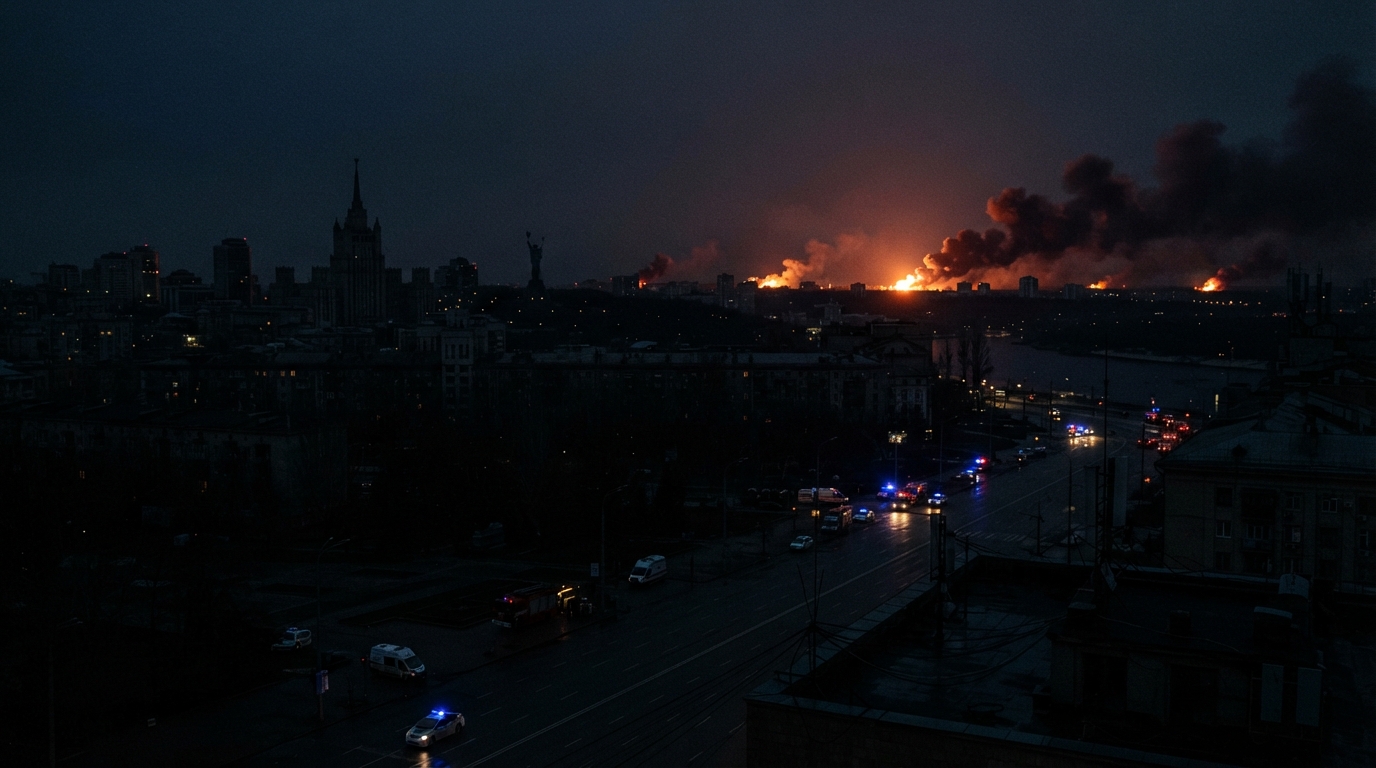
KYIV. In what military analysts are describing as one of the most intense and coordinated aerial assaults of the conflict, a wave of nearly 40 ballistic missiles and over 100 drones struck critical energy and logistics targets across Ukraine overnight between October 13 and 14, 2026.
The heavy barrage, which caught authorities largely without advanced intelligence warnings, resulted in a complete blackout across the capital and severe infrastructural damage extending into western regions.
Coordinated Missile and Drone Barrage
According to reports from the Ukrainian Ministry of Defense, Russian forces deployed approximately 39 ballistic missiles—including Iskander, Kinzhal hypersonic cruise missiles, modified S-400, and Onyx systems—alongside 128 long-range drones,. Ukrainian air defenses reportedly intercepted a significant portion of the incoming drones, but air defense capabilities were severely limited against the high-speed ballistic and hypersonic payload.
The primary focus of the missile strikes was centered squarely on power generation and electrical sub-stations in and around Kyiv, including critical installations such as Kyiv power stations No. 4, 5, and 6, the Trypilska thermal power plant, and major regional sub-stations. Direct hits resulted in large fires, residential property damage near industrial perimeters, and a complete cessation of operations across all three lines of the Kyiv underground metro system,.
Western Logistics and Rail Networks Targeted
Simultaneously, a secondary wave of jet-powered drones targeted key logistical hubs, fuel depots, and transport links across western and northwestern Ukrainian oblasts,. Major explosions and fires were reported at railway logistics nodes and locomotive depots in Vinnytsia and Ternopil, as well as commercial malls and fuel infrastructure in Khmelnytskyi and Lutsk.
Communications and Intelligence Disruption
The timing of the assault coincided with reports of sharp friction in international support. Ukrainian leadership noted that allied intelligence sharing regarding the launch vectors was notably absent prior to impact.
Concurrently, operators on the ground reported significant disruptions to tactical communications. Restrictions imposed on SpaceX’s Starlink satellite terminals—capping operational speeds over Ukrainian territory—reportedly hampered military coordination and disrupted developmental domestic defense programs, including anti-drone jet interceptor initiatives,.
Strategic Implications
The devastating scale of the overnight campaign has intensified concerns regarding the resilience of Ukraine’s remaining power grid ahead of the winter season. Observers note that the escalation aligns with mounting geopolitical pressures as international actors navigate a critical window leading up to upcoming electoral cycles abroad.
Emergency repair crews remain mobilized across the capital and affected regions, though a timeline for full restoration of power and municipal transit services has not yet been established.