
Autism, p-Cresol and the Gut: Are We Looking in the Wrong Place?
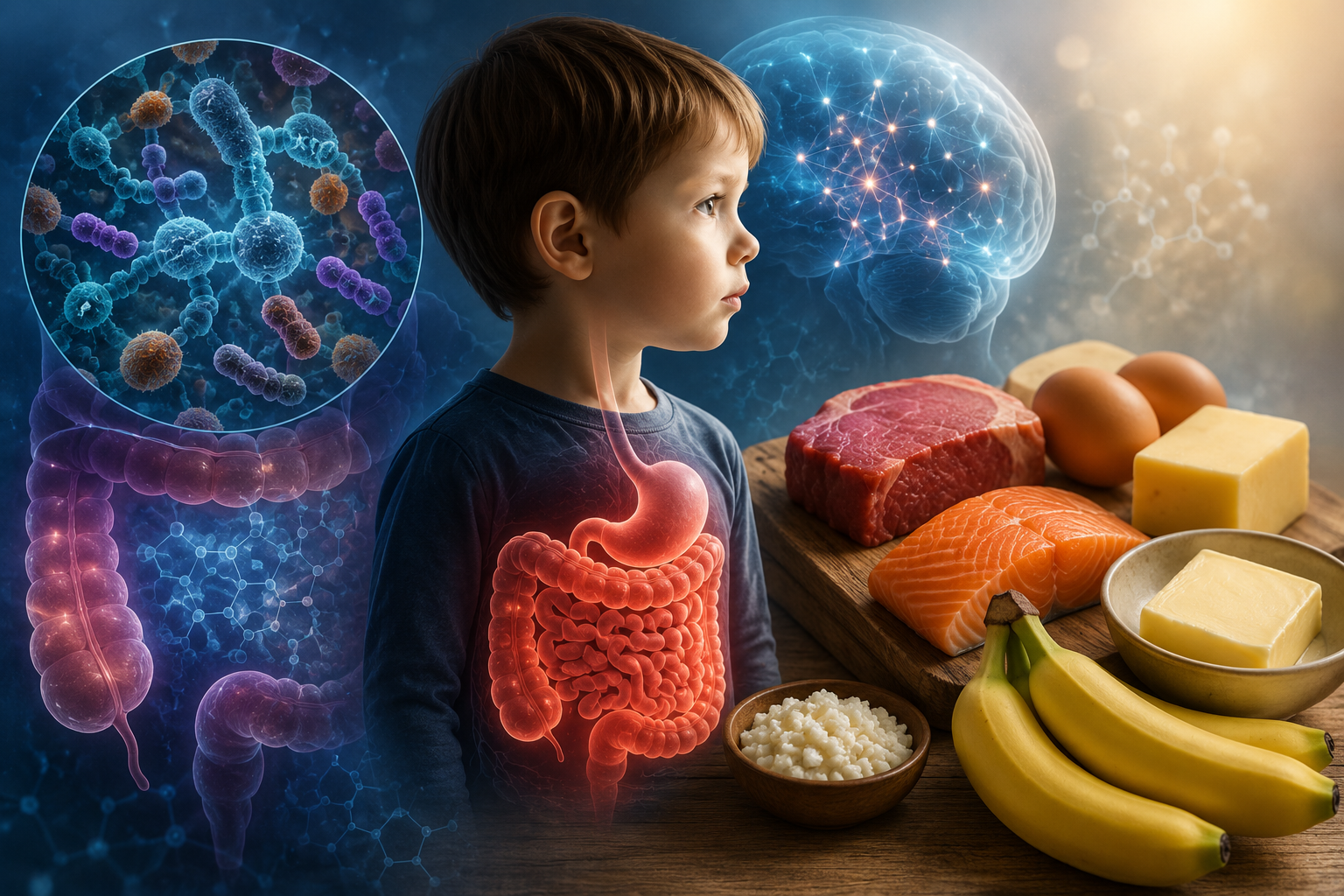
For decades, autism research has focused primarily on genetics and the brain. Billions of pounds have been spent studying genes, brain scans, and behavioural interventions. Yet many parents continue to report something that scientists are increasingly finding difficult to ignore: gastrointestinal problems are extraordinarily common in autistic children.
Constipation, bloating, abdominal pain, food sensitivities, and irregular bowel habits appear far more frequently in autistic individuals than in the general population.
This has led researchers to investigate a group of compounds produced within the gut itself. One of the most studied is p-cresol, along with its related metabolite p-cresol sulfate.
What Is p-Cresol?
p-Cresol is a chemical produced by certain gut bacteria during the breakdown of the amino acid tyrosine. Once absorbed, it is processed by the liver into p-cresol sulfate and excreted through the urine.
Several studies have found elevated p-cresol levels in at least some autistic children. Researchers have suggested that p-cresol may affect gut permeability, bacterial balance, neurotransmitter systems, and detoxification pathways.
The key question remains unanswered:
Is p-cresol contributing to symptoms, or is it simply a marker of an unhealthy gut environment?
Nobody currently knows.
The Constipation Connection
One finding appears repeatedly throughout the literature.
Autistic children with significant constipation often have higher levels of gut-derived metabolites.
This raises an obvious question.
If material remains in the colon for extended periods, does that provide more opportunity for bacteria to produce compounds such as p-cresol?
Many parents of autistic children will recognise the pattern immediately. Constipation is often one of the most persistent and difficult health challenges these children face.
Perhaps the question should not only be “What are they eating?” but also “How long is it staying there?”
Could Fermentation Be Part of the Story?
Many current nutritional approaches encourage feeding beneficial bacteria through fibre, resistant starches, prebiotics, fruits, vegetables, and whole grains.
For some children this may be beneficial.
However, another question deserves investigation.
What happens if an autistic child’s gut microbiome is already producing excessive amounts of unwanted metabolites?
Would feeding those bacteria more fermentable material help or worsen the situation?
This remains controversial.
Some clinicians report improvements when fermentable carbohydrates are reduced. Others report benefits from increasing fibre.
The reality may be that autism is not one condition but many, and different children may respond differently.
The Carnivore and Ketogenic Question
One hypothesis receiving increasing public attention is whether very low-carbohydrate or carnivore-style diets could reduce fermentation within the gut.
The theory is straightforward.
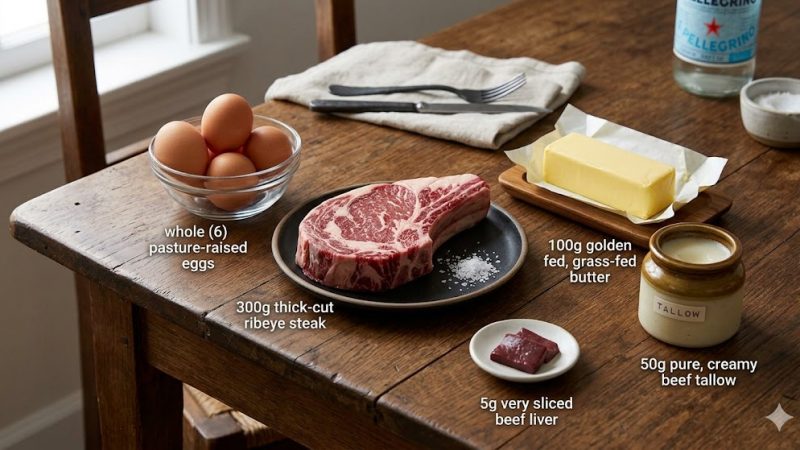
Animal foods such as:
- Beef
- Lamb
- Eggs
- Fish
- Butter
are largely digested and absorbed before reaching the colon.
If less material reaches the colon, there may be less bacterial fermentation.
Advocates argue that this could potentially reduce the production of compounds such as p-cresol.
Critics point out that protein itself can also be fermented by gut bacteria and that long-term data in autistic children are limited.
At present, there is insufficient evidence to conclude that a carnivore diet reduces p-cresol levels in autistic children.
However, the hypothesis deserves scientific investigation rather than dismissal.
The Banana Question
Consider one simple example.
Bananas are widely regarded as healthy foods.
Yet bananas, particularly green bananas, contain resistant starch that reaches the colon and is fermented by bacteria.
This raises another question.
If excessive fermentation contributes to elevated p-cresol production in some autistic children, could foods traditionally considered healthy be problematic for a subset of individuals?
Conversely, could removing such foods worsen constipation and make matters worse?
Again, we do not yet know.
These are precisely the kinds of questions that require rigorous research rather than assumptions.
Cheese, Eggs and Beef
Foods such as cheddar cheese, eggs, and beef are often consumed within ketogenic and carnivore diets.
Because they contain little or no carbohydrate, they generally contribute less to carbohydrate fermentation than fruits, grains, or resistant starches.
Yet even here the picture is not simple.
If large amounts of protein reach the colon, bacterial metabolism can still occur.
This may explain why bowel function appears to be just as important as food choice.
What Research Should Be Done Next?
Perhaps the most useful future study would compare several dietary approaches in autistic children with elevated p-cresol levels.
For example:
- Standard healthy diet
- Mediterranean diet
- Ketogenic diet
- Carnivore-style diet
Researchers could then measure:
- p-Cresol
- p-Cresol sulfate
- Constipation severity
- Gastrointestinal symptoms
- Behavioural outcomes
- Sleep
- Communication
- Quality of life
Rather than arguing on social media, we could finally obtain real answers.
A Question Worth Asking
For years autism research has focused on the brain.
Perhaps part of the answer lies elsewhere.
If p-cresol is elevated in many autistic children, if constipation is common, and if diet directly influences what reaches the gut microbiome, then perhaps we should be asking a simple question:
Are we paying enough attention to what is happening inside the colon?
The answer may not be carnivore.
The answer may not be ketogenic.
The answer may not even involve diet at all.
But until these questions are properly investigated, we cannot know.
And science advances not by defending assumptions, but by testing them.