
Beyond the Weight-Loss Jab: What GLP-1 Drugs Can and Cannot Solve
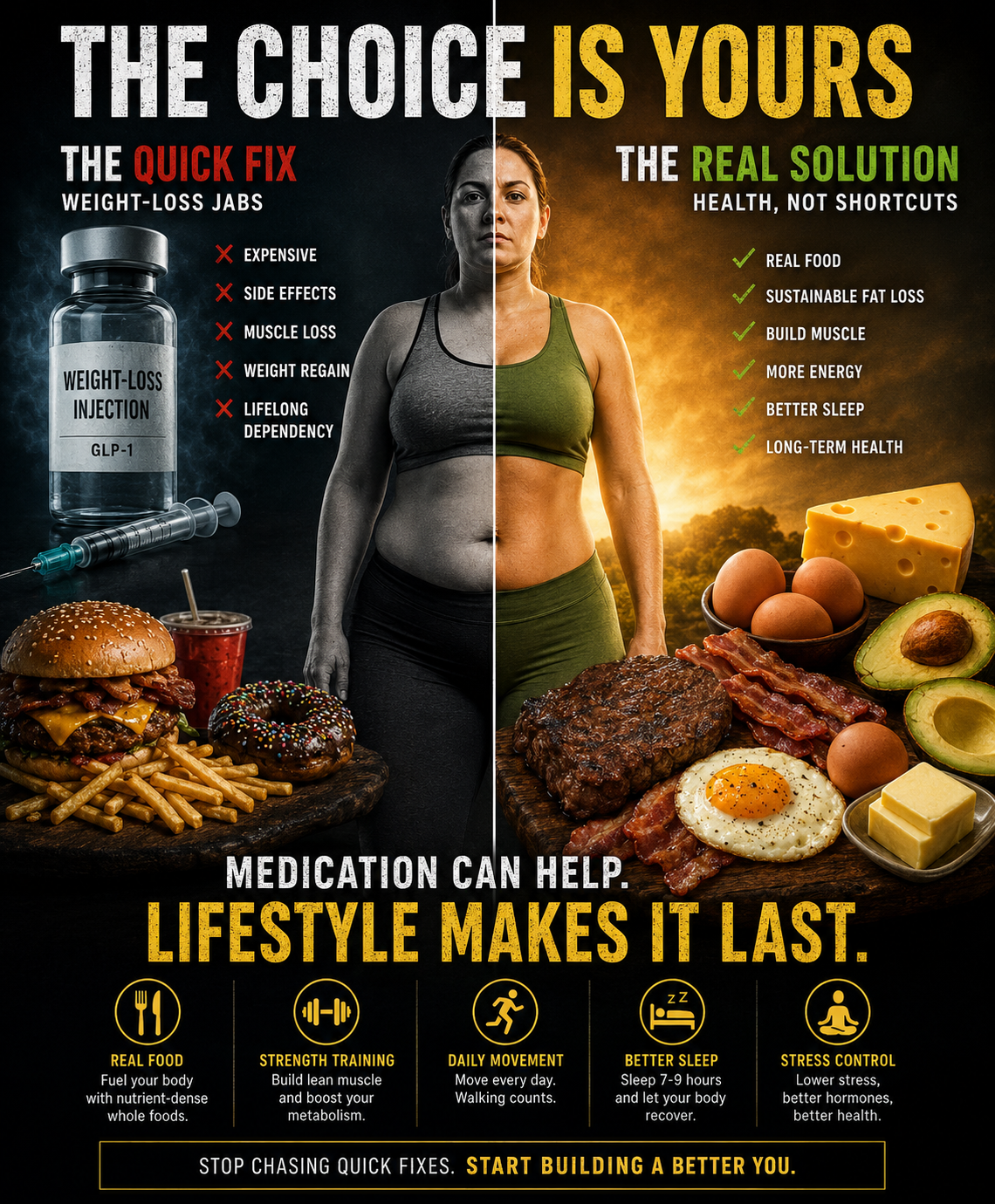
Over the past few years, weight-loss injections such as Wegovy, Ozempic, and Mounjaro have been hailed as a revolution in obesity treatment. Headlines describe them as miracle drugs. Politicians talk about their potential to reduce pressure on healthcare systems. Pharmaceutical companies celebrate record sales.
There is no question that these medications have changed the conversation around obesity.
The real question is whether they are solving the problem or simply helping us manage the consequences of a much deeper crisis.
The Success Story Is Real
Any honest discussion must begin with the facts.
Modern GLP-1 medications can help many people lose significant amounts of weight. Clinical trials have shown impressive results, with some patients losing 15 to 20 percent of their body weight or more. Many people report improvements in mobility, blood sugar control, blood pressure, and overall quality of life.
For individuals struggling with severe obesity and obesity-related health problems, these drugs may be genuinely life-changing.
Dismissing these benefits would be scientifically dishonest.
At the same time, acknowledging their success does not mean we should stop asking difficult questions.
Are We Treating the Cause or the Symptom?
Obesity did not suddenly appear because millions of people simultaneously lost self-control.
Over the last fifty years, our food environment has changed dramatically. Ultra-processed foods now dominate supermarket shelves. Sugary drinks, refined carbohydrates, and highly engineered snack foods are available everywhere. Many people spend most of their day sitting, sleeping poorly, and living under constant stress.
Against this backdrop, obesity rates have risen across much of the world.
Weight-loss injections can help people eat less. What they do not do is change the environment that contributed to the problem in the first place.
A person can lose weight on a GLP-1 drug while continuing to live in the same food environment, facing the same pressures and temptations that contributed to weight gain.
That is why these medications should be viewed as a tool, not a complete solution.
The Challenge of Long-Term Use
One of the most important questions surrounding GLP-1 medications is what happens when treatment stops.
Studies suggest that many patients regain a substantial proportion of the lost weight after discontinuing treatment. This does not necessarily mean the medication has failed. Many chronic medical conditions require ongoing treatment.
However, it does mean that society should think carefully about what long-term obesity management looks like.
If millions of people require lifelong medication to maintain weight loss, there are obvious questions about cost, access, sustainability, and healthcare priorities.
These questions deserve serious public discussion rather than simplistic slogans.
Weight Loss Is Not the Same as Health
When people hear the words “weight loss,” they often assume that every kilogram lost is body fat.
The reality is more complex.
Research shows that weight loss achieved through medication can include both fat loss and lean tissue loss. This is why adequate protein intake and resistance exercise are increasingly recommended alongside GLP-1 treatment.
The goal should not simply be to make people lighter.
The goal should be to improve metabolic health, preserve strength, maintain independence, and reduce the risk of chronic disease.
A healthy body is more than a number on a scale.
Side Effects and Unanswered Questions
Like all medications, GLP-1 drugs carry risks.
Common side effects include nausea, vomiting, diarrhea, constipation, and gastrointestinal discomfort. More serious complications, such as gallbladder disease and pancreatitis, can occur in some individuals.
For many patients, the benefits may outweigh these risks. For others, they may not.
The medical community continues to gather data on longer-term use. While these medications have undergone extensive testing and monitoring, there are still important questions about how decades of widespread use may affect populations over time.
Good medicine requires ongoing evaluation rather than blind enthusiasm.
The Forgotten Foundation of Health
The debate around weight-loss injections often overlooks a simple truth:
No medication can fully replace the foundations of health.
Sleep still matters.
Physical activity still matters.
Nutrition still matters.
Muscle mass still matters.
Stress management still matters.
Even the strongest supporters of GLP-1 medications generally agree that long-term health outcomes are likely to be best when medication is combined with sustainable lifestyle changes.
The danger lies in believing that a prescription alone can solve a complex public health problem.
A Better Way Forward
The future does not have to be a choice between medication and lifestyle.
A sensible public health strategy would embrace both.
Weight-loss injections should be available to people who can benefit from them, particularly those living with severe obesity and related medical conditions.
At the same time, governments and healthcare systems should address the root causes of poor metabolic health by improving food quality, reducing dependence on ultra-processed foods, encouraging physical activity, promoting better sleep, and educating the public about nutrition.
Treatments matter.
Prevention matters even more.
Conclusion
GLP-1 medications represent one of the most significant developments in obesity treatment in modern medicine. They offer real benefits and real hope to many people.
But they are not a magic bullet.
They cannot single-handedly reverse decades of poor nutrition, sedentary lifestyles, and metabolic dysfunction.
The real challenge is not deciding whether these drugs are good or bad.
The real challenge is ensuring that society does not mistake a powerful treatment for a complete solution.
The future of public health will not be built on injections alone. It will be built on creating a healthier environment in which fewer people need them in the first place.