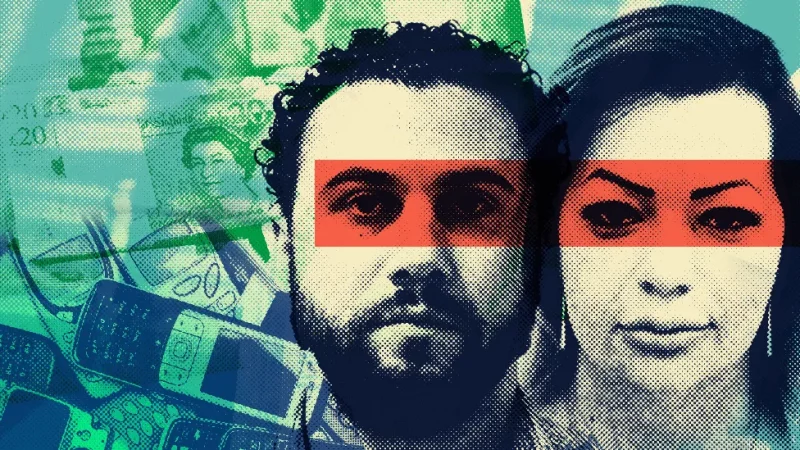

Police Chief Apologises to Henry Nowak’s Family Over Handcuffing and Arrest

The Chief Constable of Hampshire Police has issued a public apology to the family of Henry Nowak after officers handcuffed and arrested the 18-year-old university student while he was dying from stab wounds.
The apology comes after the release of body-camera footage that has shocked the country and raised serious questions about police decision-making during the final moments of Henry’s life.
What happened that night is no longer in dispute.
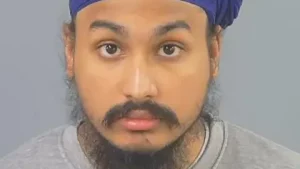
Henry Nowak was the victim of a fatal stabbing. His attacker, Vickrum Digwa, was later convicted of murder and sentenced to life imprisonment. During the incident, Digwa claimed that he had been subjected to a racist attack and presented himself to officers as the victim.
Police officers arriving at the scene accepted that version of events.
Henry, despite suffering catastrophic injuries, was treated as a suspect. He was handcuffed and arrested while repeatedly telling officers that he had been stabbed. It was only later that the true circumstances became clear.
For Henry’s family, no apology can undo what happened.
For the wider public, however, the case raises difficult questions that cannot simply be dismissed as a single mistake.
The Facts Are Bad Enough
Before discussing politics, race, immigration, or ideology, it is worth focusing on the facts themselves.
An innocent young man was murdered.
Police officers arrived at the scene.
The murderer lied.
The police believed the murderer.
The victim was handcuffed.
The victim died.
Even stripped of all political context, those facts represent a profound failure.
Every citizen expects that if they are the victim of a violent crime, emergency services will identify them as such and provide immediate assistance. That expectation forms part of the basic social contract between citizens and the state.
In Henry Nowak’s case, that expectation was not met.
Why Did It Happen?
This is the question now dividing public opinion.
One explanation is simple incompetence.
Police officers frequently arrive at chaotic scenes where information is incomplete, witnesses are confused, and suspects deliberately lie. Officers must make rapid decisions, often within seconds.
History contains many examples of police officers initially arresting the wrong person or misunderstanding a situation before later correcting themselves.
If the Henry Nowak case is ultimately found to be the result of poor judgment, inadequate training, or a failure to properly assess evidence at the scene, then it represents an extreme example of a problem that has existed in policing for decades.
But many members of the public are not convinced that incompetence alone explains what happened.
The Question Nobody Can Avoid
The question many people are asking is whether officers approached the situation with assumptions that influenced their judgment.
Did they unconsciously believe one person and distrust another before properly examining the evidence?
Were they influenced by concerns about race?
Were they attempting to avoid making the wrong decision and instead ended up making the worst possible one?
These questions deserve investigation.
At present, however, there is a distinction between suspicion and proof.
Many people believe they know exactly why the officers acted as they did.
The truth is that the investigation has not yet established the motivations behind every decision made that night.
The public should resist the temptation to treat assumptions as facts.
Why The Case Resonates So Deeply
The anger surrounding Henry Nowak’s death is not solely about one murder.
It reflects a broader crisis of confidence.
Across Britain, many people feel that institutions no longer work as they once did. They see rising crime in some areas, overloaded public services, political division, and repeated examples of institutional failure.
When they watched the footage of Henry being handcuffed, many did not simply see a tragic mistake.
They saw confirmation of fears they already held.
The question that echoed across social media was simple:
“If this could happen to him, could it happen to me?”
Whether that fear is justified statistically is almost beside the point.
Public trust depends not only on reality but on confidence.
Confidence is difficult to build and remarkably easy to destroy.
The Danger Of Political Exploitation
Predictably, political factions have rushed to claim the case supports their existing worldview.
Some on the right see Henry’s death as proof that the authorities are more concerned with political sensitivities than protecting ordinary citizens.
Some on the left warn against using a tragedy to inflame racial tensions or attack entire communities.
Both sides contain elements of truth.
Both sides also contain people eager to recruit Henry Nowak into a political argument that began long before his death.
The risk is that the search for justice becomes secondary to the search for political advantage.
The Real Test
The apology from Hampshire Police is significant.
It acknowledges that something went terribly wrong.
But apologies are only the beginning.
The real test is whether the public receives a complete and transparent explanation of how officers came to handcuff a dying victim while believing the man who had stabbed him.
Only then can the public decide whether this was a case of incompetence, bias, poor training, procedural failure, or some combination of all four.
Henry Nowak’s family deserve those answers.
The public deserves them too.
Because the most troubling aspect of this case is not that a murderer lied.
Murderers lie.
The troubling question is why the lie was believed.