For nearly a decade, all-solid-state batteries have been hailed as the holy grail of electric mobility—perennially promised by legacy automakers, heavily funded by venture capital, yet consistently stuck a few years away from the assembly line. That timeline shifted on October 13, 2026, when Guangzhou-based Greater Bay Technology (GBT), backed by automaker GAC, officially commissioned the world’s first certified gigawatt-hour-scale production line for all-solid-state cells.
Unlike prototype batches or hybrid “semi-solid” gel chemistries, these cells are certified under China’s newly established national standards (GB/T 48093.1-2026). However, the real operational breakthrough is not a magic leap in range—it is a manufacturing pivot that fundamentally challenges how battery factories are built.
The Manufacturing Shortcut: Liquid-to-Solid In-Situ Electrolytes
The classic bottleneck holding back solid-state commercialization has always been capital expenditure. Conventional solid-state chemistries—particularly sulfide-based designs pursued by firms like Toyota—require pristine, oxygen-free, bone-dry environments. A greenfield sulfide plant demands billions in purpose-built tooling before producing a single pack.
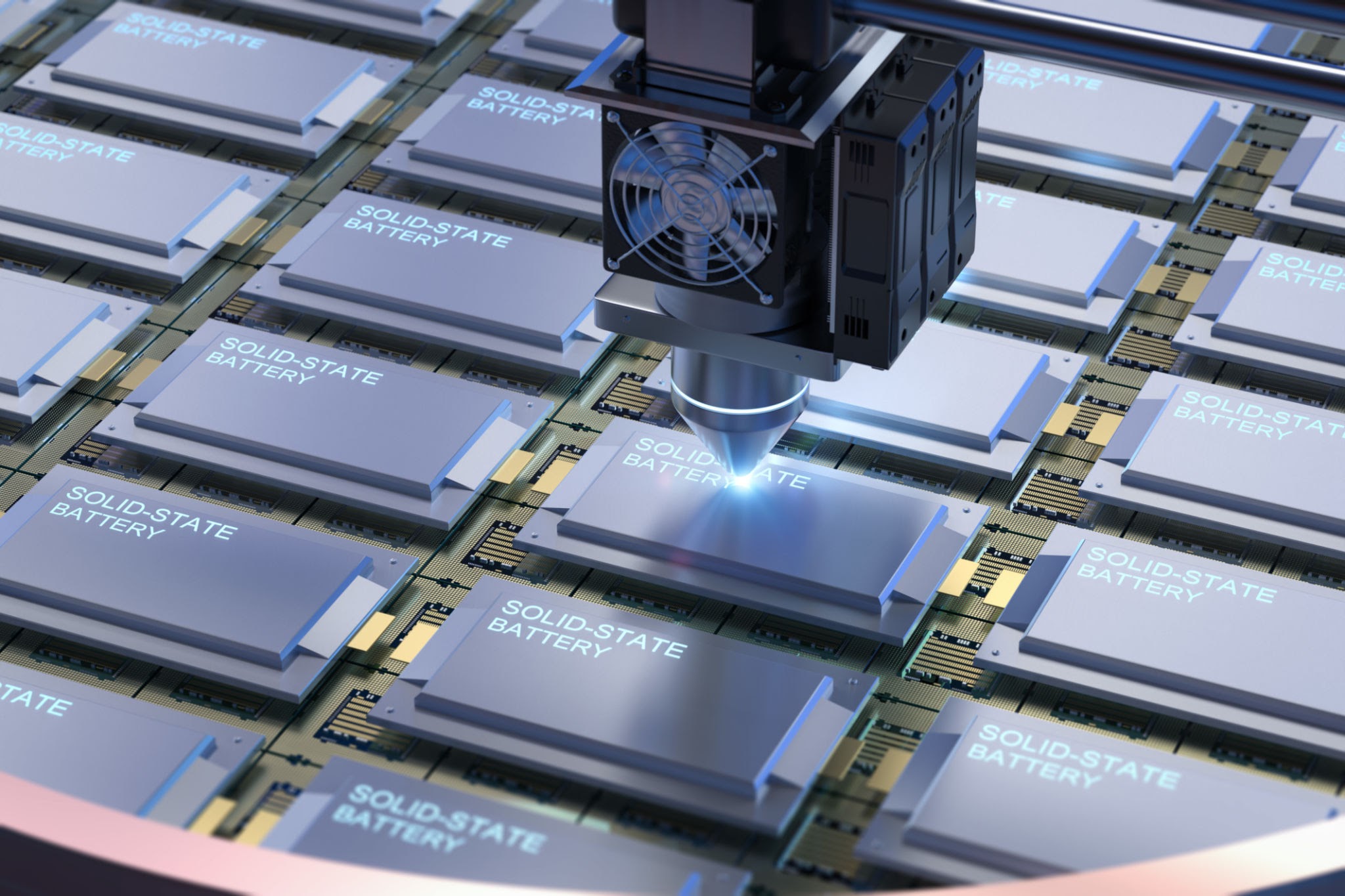
GBT bypassed this barrier by altering the chemical process rather than the factory floor. They converted an existing 4 GWh conventional lithium-ion production line in Nansha, Guangzhou, allocating 1 GWh of initial capacity directly to solid-state output. The electrolyte is introduced as a low-viscosity liquid precursor during cell filling. Once sealed inside the pouch, it cures and polymerizes into a dense, solid composite matrix.
Because the initial handling mirrors standard wet electrolyte injection, standard electrode winding, stacking, formation, and testing equipment remain intact. Crucially, the plant retains the flexibility to switch back to liquid-electrolyte production if demand or supply chain dynamics dictate.
Solid-State vs. Conventional Lithium-Ion: The Real Comparison
Headlines often bundle solid-state technology with claims of 1,000-mile ranges and five-minute recharging. The reality of these first-generation production cells is more grounded: they deliver standard energy density paired with a massive leap in mechanical and thermal stability.
| Metric | Conventional Liquid Li-Ion (NMC / LFP) | GBT First-Gen Solid-State Cell |
|---|---|---|
| Electrolyte State | Flammable liquid organic solvent + LiPF6 salt | In-situ polymerized solid composite |
| Specific Energy Density | ~160 Wh/kg (LFP) to ~280 Wh/kg (High-Ni NMC) | ~260 Wh/kg (Gen 1) / up to 480 Wh/kg (Future Li-metal) |
| Thermal Runaway Risk | Moderate to High; separator melt triggers fire at 130–180°C | Near zero; passes nail penetration and 120°C vacuum bake tests |
| Volatile Mass Loss | Liquid boils off under high heat/puncture | <0.5% mass loss after 6 hours at 120°C in vacuum |
| Pack-Level Cooling Needs | Complex active liquid cold plates, chillers, and firewalls | Significantly simplified thermal management structures |
| Manufacturing Method | Standard gigafactory roll-to-roll liquid injection | Drop-in retrofit on standard liquid assembly lines |
Safety Benchmarks: Surviving the Needle Test
Under China’s strict GB 38031-2025 traction battery safety standard, battery cells must prove zero flame and zero explosion under extreme mechanical abuse. During third-party certification of GBT’s 35Ah and 44.5Ah cells:
- Mechanical Puncture: Fully charged cells subjected to complete steel nail penetration exhibited zero fire, smoke, or explosive thermal propagation.
- Vacuum Outgassing: Cells baked unsealed at 120°C under high vacuum for six consecutive hours lost less than 0.5% of their total mass, verifying the absence of free volatile solvents that cause explosive vapor clouds in conventional pack fires.
The Trade-Off: Range Stays the Same, For Now
The initial trade-off is clear: GBT’s first-generation cell does not double driving range. By utilizing established cathode and anode materials to ensure rapid manufacturability, the cell operates at roughly 260 Wh/kg—matching the density of current high-nickel packs found in Tesla or Zeekr vehicles.
The advertised ceiling of 480 Wh/kg relies on a future generation incorporating pure lithium-metal anodes, which remains a developmental step. However, matching liquid Li-ion energy density while eliminating catastrophic fire risk enables automotive engineers to strip away heavy steel blast shields and redundant cooling plates. At the pack level, that weight reduction still yields tangible efficiency gains.
With GAC’s premium Hyper brand slated to pilot these cells and 1 GWh of active capacity online, solid-state technology has officially exited the cleanroom laboratory and entered the commercial supply chain.