
The Death of LithiumCATL Confirms Mass Production of Game-Changing Sodium-Ion Batteries
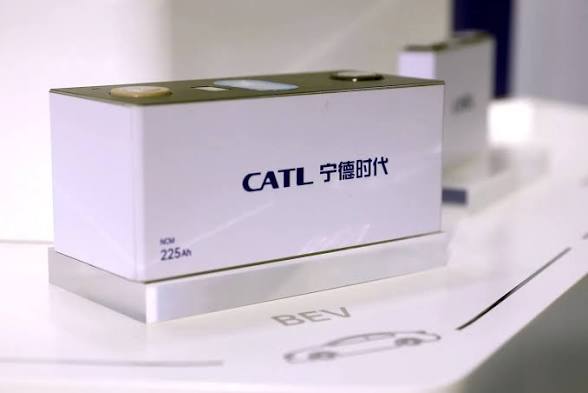
The global energy transition has just hit a massive historic inflection point. Contemporary Amperex Technology Co. Ltd. (CATL), the world’s largest battery manufacturer, has officially confirmed that it has broken through the core manufacturing bottlenecks holding back sodium-ion technology and will begin large-scale mass production and supply this year.
Speaking at the 2026 Equipment Powerhouse Forum, Dr. Wu Kai, Chief Scientist at CATL and an Academician of the Chinese Academy of Engineering, sent shockwaves through the industry by announcing that the era of sodium is no longer a future pilot program—it is happening now.
The Massive 60 GWh Catalyst
Proving that this rollout is strictly commercial scale, CATL recently finalized a massive three-year, 60 GWh sodium-ion supply deal with Beijing HyperStrong Technology, the largest Chinese energy storage system integrator. To put that into perspective, this single order represents roughly half of all the energy storage batteries CATL shipped globally in the entire year of 2025.
Industry analysts are already calling this a massive moment for clean energy—a sudden, aggressive scaling of a highly disruptive technology that drastically undercuts the existing economic landscape. To handle the incoming demand, CATL has just announced an additional investment to build out dedicated sodium-ion production lines right alongside their massive LFP and NMC lines.
Why Sodium Changes Everything: The Specs
For years, sodium-ion was written off as a low-energy chemistry only suitable for golf carts or small toys. CATL’s new Naxtra battery line completely shatters that narrative with specs that directly challenge traditional Lithium Iron Phosphate (LFP) baselines:
Energy Density: Naxtra cells have reached 175 Wh/kg, closing the gap and sliding squarely into the 160 to 180 Wh/kg range of standard LFP cells.
Extreme Lifespan: For utility energy grids, CATL’s large-format version boasts a mind-boggling cycle life exceeding 15,000 cycles at 80 percent capacity retention—triple the lifespan of typical lithium-based options.
Sub-Zero Mastery: Sodium thrives where lithium dies. The Naxtra cells operate flawlessly down to minus 40 degrees Celsius while retaining roughly 90 percent of their nominal capacity. For cold-weather climates like Canada, this eliminates winter range degradation and freezing charge-rate drops.
Plug-and-Play Design: Critically, CATL designed these sodium cells to share the exact physical form factor dimensions as its existing lithium lines. Automakers and grid integrators can drop them into current manufacturing lines without expensive structural retooling.
The Cost Disruption: Crashing to 19 Dollars Per kWh
The real threat to the lithium monopoly is pure economics. Sodium is one of the most abundant elements on Earth, making it immune to the volatile, highly concentrated geopolitical supply chains that plague lithium, cobalt, and nickel.
CATL is targeting an immediate 30 percent cost reduction compared to LFP cells in the near term. However, the long-term roadmap is even more aggressive: as supply lines mature, production costs are projected to plummet by 70 to 80 percent, targeting an unprecedented 19 dollars per kWh. For comparison, current low-cost LFP cells still sit around 55 to 60 dollars per kWh.
Where Will You See Them First?
The initial waves of mass-produced sodium batteries will be split across four sectors: stationary utility grid storage, commercial fleets, battery-swapping networks, and budget passenger vehicles.
In fact, the world’s first mass-produced passenger EV utilizing this technology—the Changan Nevo A06—is slated to hit the roads within the coming months, targeting the highly affordable, entry-level segment priced under 14,500 dollars. While early automotive applications focus on short-range city cars, CATL’s roadmap notes that advanced configurations targeting a single-charge range of 600 km are already in development, bringing sodium into the mid-range EV market.
The Global Outlook: A Two-Speed Adoption
While China accelerates into a tri-production reality, Western markets will face a delay.
Because North America is currently locked into investing billions of dollars to establish local, domestic lithium and LFP supply chains to catch up with current technology, industry analysts expect it could take 5 to 10 years before sodium-ion makes major mainstream inroads in the US market. However, as the cost benefits become undeniable, market pressure may force an accelerated timeline.
With CATL holding a dominant share of the battery market, the addition of an ultra-low-cost, highly resilient chemistry makes the battery giant incredibly difficult to compete with—and marks the official beginning of the post-lithium era.
What are your thoughts on sodium-ion batteries? Would you buy an EV that promises flawless performance in freezing winter conditions at a 30 percent discount? Let us know in the comments below!